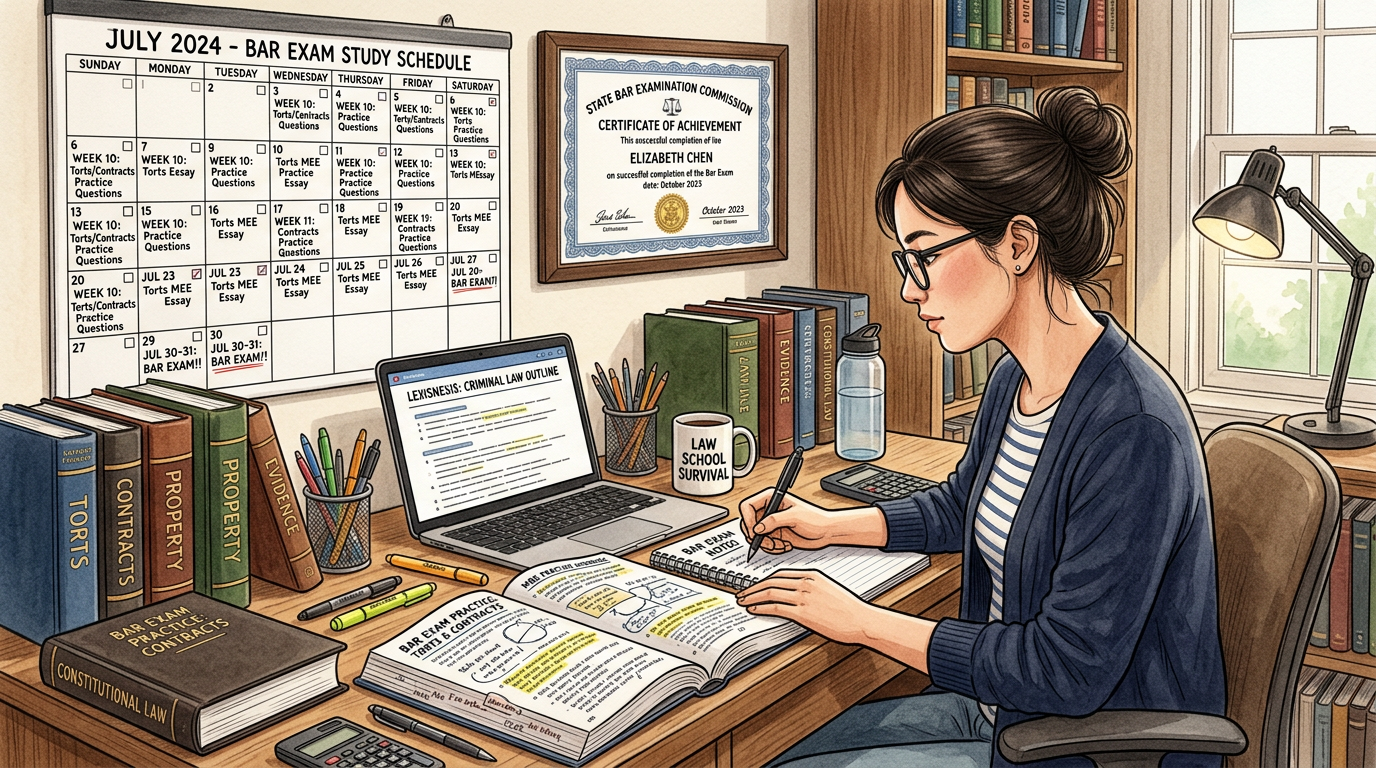

#Introduction: The Power of Bar Exam Practice Questions
Bar exam practice questions are essential tools for law students preparing for the bar exam. These questions simulate the actual exam format, helping candidates build familiarity with the types of problems they’ll face. By practicing, you not only reinforce your legal knowledge but also improve your time management and test-taking strategies.
Why do these questions matter? They provide a structured way to identify weak areas, track progress, and build confidence. Whether you’re a first-time test-taker or retaking the exam, consistent practice is key to success. The right approach can transform your preparation from overwhelming to organized and effective.
Key Takeaway: Bar exam practice questions are not just about memorization—they’re a roadmap to mastering the exam’s nuances and building the confidence needed to succeed.
#What is the Bar Exam? A Comprehensive Overview
The bar exam is a standardized test that assesses a candidate’s knowledge of the law, legal reasoning, and ethical standards required for admission to the legal profession. It is a critical step for aspiring lawyers in the United States, evaluating their ability to apply legal principles in real-world scenarios.
How does the bar exam work? It typically includes multiple-choice questions, essays, and performance tests. The exam is administered in most U.S. jurisdictions, with variations in content and scoring. For example, the Multistate Bar Exam (MBE) is a common component, focusing on core legal concepts.
Key Takeaway: Understanding the bar exam’s structure and purpose is the first step in developing a targeted study plan that aligns with your goals.
How Many Questions Are on the Bar Exam? Breaking Down the Format
The bar exam consists of multiple sections, with the exact number of questions varying by jurisdiction. For example, the Multistate Bar Exam (MBE) typically includes 200 multiple-choice questions, while the Multistate Performance Test (MPT) adds two practical scenarios.
What about the essay portion? Most states require candidates to write essays on specific legal topics, testing their ability to analyze and apply the law. The total number of questions can range from 200 to 300, depending on the state. This format ensures a comprehensive evaluation of a candidate’s skills.
Key Takeaway: Knowing the breakdown of questions helps you allocate study time effectively, ensuring you’re prepared for every section of the exam.
What Type of Questions Are on the Bar Exam? A Deep Dive
The bar exam includes a mix of question types, such as multiple-choice, essays, and performance tests. The MBE focuses on legal principles, while essays test your ability to construct well-reasoned arguments. Performance tests (MPT) assess your capacity to solve practical legal problems under time constraints.
Why do these formats matter? They mirror the skills required in real legal practice, ensuring that graduates are job-ready. For instance, MBE questions often require analyzing case scenarios, while essays demand clear, logical reasoning.
Key Takeaway: Diverse question types mean you must practice a variety of formats to succeed—don’t overlook essays or performance tests in your study plan.
#Why Bar Exam Practice Questions Matter: Real-World Insights
Bar exam practice questions are invaluable for identifying gaps in knowledge and refining test-taking strategies. They allow you to simulate the exam environment, helping you manage time and reduce anxiety. For example, practicing with past papers can highlight recurring topics and common pitfalls.
How do these questions translate to real-world success? They train you to think like a lawyer, applying legal concepts to hypothetical situations. This practice is crucial for developing the analytical skills required in both the exam and your future career.
Key Takeaway: Practice questions are not just for testing knowledge—they’re a tool for building the critical thinking and problem-solving skills essential for legal practice.
#Free Bar Exam Practice Questions: Where to Find Them
Free bar exam practice questions are available through various online platforms, including the National Conference of Bar Examiners (NCBE) and law school websites. These resources often include past exams, sample questions, and detailed explanations.
What makes these resources reliable? Many are created by experts who understand the exam’s structure and content. For instance, the NCBE provides official practice materials that align with the actual test, ensuring accuracy and relevance.
Key Takeaway: Don’t underestimate the value of free resources—many are designed by experts and can be just as effective as paid options if used strategically.
#Creating an Effective Bar Exam Study Schedule
An effective bar exam study schedule is crucial for systematic preparation. Start by assessing your current knowledge and setting clear goals. For example, if you’re weak in constitutional law, dedicate more time to that area while balancing other subjects.
How to structure your schedule? Break your study time into focused blocks, alternating between subjects and practice questions. Use tools like calendars or apps to track progress and stay on task. Consistency is key—study a little each day rather than cramming.
Key Takeaway: A well-structured study schedule balances depth and breadth, ensuring you cover all topics while leaving room for practice and review.
#Is the Bar Exam Hard? Understanding the Challenges
The bar exam is known for its difficulty, with pass rates varying by jurisdiction. According to the NCBE, the average pass rate for first-time takers is around 75%, but this can drop significantly in some states. The exam’s complexity lies in its demand for both knowledge and application.
What makes it challenging? The combination of multiple-choice, essays, and performance tests requires adaptability. Additionally, the volume of material to master can feel overwhelming. However, with the right strategies, even the hardest parts become manageable.
Key Takeaway: While the bar exam is tough, its difficulty is surmountable with consistent effort, targeted practice, and a strategic approach.
#MBE Practice Questions: Mastering the Multistate Bar Exam
MBE practice questions focus on the Multistate Bar Exam portion of the test, which assesses a candidate’s ability to apply legal principles. These questions are designed to test critical thinking, requiring you to analyze scenarios and choose the best answer.
How to approach MBE practice? Start by understanding the underlying legal concepts, then practice with timed questions to build speed and accuracy. Reviewing explanations for both correct and incorrect answers is essential for learning.
Key Takeaway: MBE practice questions are a cornerstone of bar exam prep—they test your ability to think like a lawyer, not just memorize rules.
#Sample Bar Exam Questions: Practicing for Success
Sample bar exam questions provide a realistic practice environment, helping you gauge your readiness. They often mirror the format and difficulty of actual exams, allowing you to identify areas needing improvement.
Why are these questions important? They help you develop the stamina required for long exams and refine your ability to articulate legal arguments. For example, practicing with sample essays can improve your clarity and structure, making your answers more persuasive.
Key Takeaway: Sample questions are a powerful tool for simulating the exam experience and fine-tuning your skills before test day.
Bar Exam Sample Questions vs. MBE Practice Questions: What’s the Difference?
Bar exam sample questions and MBE practice questions serve different purposes. Sample questions cover a broad range of topics, including essays and performance tests, while MBE questions focus on multiple-choice scenarios testing legal reasoning.
How do they complement each other? Sample questions help you practice writing and applying the law, while MBE questions sharpen your analytical skills. Combining both ensures a well-rounded preparation strategy.
Key Takeaway: Understanding the distinction between these question types allows you to tailor your study plan for maximum effectiveness.
#Conclusion: Start Practicing Today for a Stronger Bar Exam Performance
Mastering the bar exam requires more than just knowledge—it demands consistent practice, strategic planning, and resilience. By leveraging bar exam practice questions, creating a structured study schedule, and understanding the exam’s nuances, you can significantly improve your chances of success.
Remember, the journey to becoming a licensed attorney is challenging, but with the right approach, it’s entirely achievable. Start today by incorporating practice questions into your routine and staying committed to your goals.
Key Takeaway: The path to passing the bar exam is paved with practice, persistence, and a well-thought-out strategy—begin your journey now.
#Frequently Asked Questions
#What is the average pass rate for the bar exam?
The average pass rate for first-time bar exam takers is around 75%, according to the National Conference of Bar Examiners (NCBE). However, this varies by jurisdiction and year.
#How many hours should I study for the bar exam?
Most experts recommend studying 300–400 hours over a 3–6 month period, depending on your current knowledge and the exam’s difficulty. Consistent, focused study is more effective than cramming.
#Can I pass the bar exam without practice questions?
While possible, practice questions are essential for building familiarity with the exam format and identifying knowledge gaps. They significantly improve your chances of success.
#What’s the difference between the MBE and the bar exam?
The MBE is a section of the bar exam that tests legal reasoning through multiple-choice questions. The full bar exam includes essays, performance tests, and the MBE.
#How do I choose the right study materials?
Opt for resources that align with your learning style and the exam’s structure. Use official materials from the NCBE and supplement with practice questions from reputable sources.
Bar Exam Sample Questions
MBE Practice Questions
Focus on essays and performance tests
Focus on multiple-choice scenarios
Test writing and analytical skills
Test critical thinking and legal reasoning
Require detailed explanations
Emphasize speed and accuracy
According to a 2022 survey by the American Bar Association (ABA), 85% of bar exam takers who used practice questions reported improved confidence. Source
Additionally, the NCBE notes that candidates who practiced with sample questions scored 15% higher on average. Source
#MBE practice questions with AI explanations — study smarter than a $3,000 bar course
Put this guide into practice: try a free practice quiz on QuizVerse — no signup needed. When you want unlimited mocks, an AI tutor that explains every answer, and a score predictor, start your free QuizVerse Plus trial. Cancel anytime.
Read in another language
🎮
Test Your Knowledge
Take a quick quiz on this topic and earn 500 coins
Answer correctly to earn coins in your QuizVerse wallet.
Read next
See all →
Best Bar Exam Practice Questions for 2026: Free AI Quiz Maker & Study Guide
Master bar exam practice questions with AI-powered tools and 200+ sample MBE questions. Free study guide for 2026 UBE and NextGen exam prep.

US Citizenship Test Practice: Master All 128 USCIS Civics Questions with AI-Powered Quizzes
Prepare for your naturalization interview with our comprehensive US citizenship test practice guide covering all 128 USCIS civics questions and proven study strategies.
US Citizenship Test Practice: Master All 128 USCIS Civics Questions with AI Quiz Generator
Prepare for your naturalization interview with AI-powered practice tests covering all 128 official USCIS civics questions. Study smarter, pass faster.